
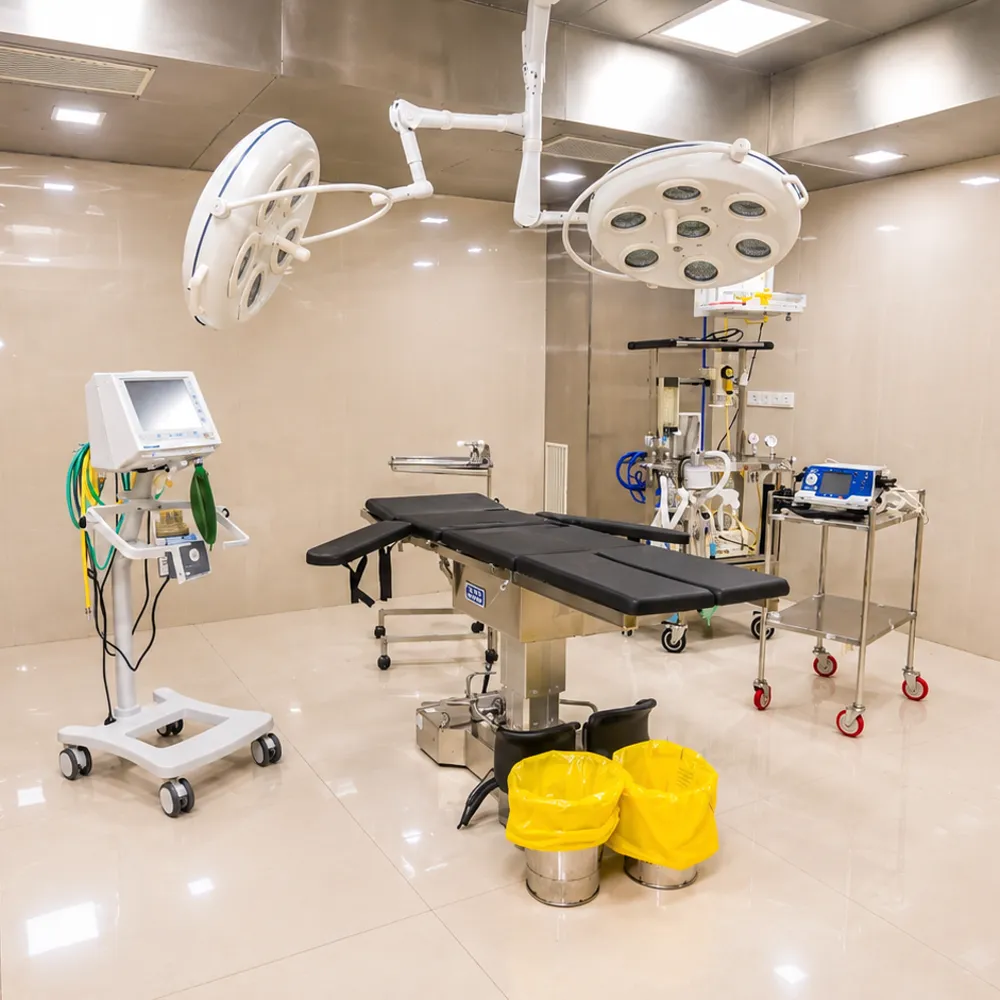
IUI (Intrauterine Insemination) is one of the most affordable and effective first-line fertility treatments. At Aakash Fertility Centre, IUI treatment costs start from ₹8,000 to ₹20,000 per cycle with transparent pricing and expert fertility guidance.
Last updated 9 June 2026 · Aakash Fertility Centre & Hospital, Chennai- ₹8,000IUI starting price
- 1stIVF centre in Chennai
- 33+ yearsexperience
- 60,000+families helped
Book a consultationWhatsApp us
IUI Treatment Cost
Transparent Pricing

IUI Treatment Cost in Chennai 2026
- Honest, all-inclusive package pricing curated by Chennai’s first IVF centre — with no hidden costs and a personalised plan for every couple.
- From ₹8,000 / cycle
- No hidden charges
- Personalised quote in 24h
Natural Cycle IUI
₹8,000 – ₹10,000per package
- Semen preparation, insemination, scan
Stimulated IUI (Oral Medication)
₹10,000 – ₹14,000per package
- Includes ovulation medication
Stimulated IUI (Injectable FSH)
₹15,000 – ₹20,000per package
- Includes FSH injections + monitoring
IUI with Donor Sperm
₹12,000 – ₹22,000per package
- ICMR-screened donor sperm programme
3-Cycle IUI Package
₹22,000 – ₹45,000per package
- Best value package with monitoring included
- Note: Pre-IUI investigations like semen analysis, HSG, and hormone tests are quoted separately as one-time tests.
Understand the procedure

What Is IUI Treatment?
IUI (Intrauterine Insemination) is a simple fertility treatment where a specially prepared sperm sample is placed directly into the uterus during ovulation to improve pregnancy chances
-
IUI from ₹8,000 per cycle -
No surgery or anaesthesia -
5–10 minute procedure -
Same-day discharge -
Results in 2 weeks
What Happens During IUI — Step by Step
Step 1
Consultation & Fertility Tests
Hormone tests, scans, and semen analysis help identify the best treatment approach.
Step 2
Ovulation Monitoring
Follicle growth is monitored through ultrasound scans to identify the ideal insemination timing.
Step 3
Sperm Preparation
The healthiest sperm are separated and concentrated in the embryology lab.
Step 4
Insemination Procedure
A prepared sperm sample is gently placed inside the uterus in a quick 5–10 minute procedure.
Step 5
Pregnancy Test
A blood pregnancy test is done approximately 14 days after the procedure.
IUI vs IVF — Which Is Right for You?
Frequently Asked Questions — IUI Cost in Chennai
Step 1 : Ovarian Stimulation
-
Normally, a woman releases just one egg per month. -
In IVF, the goal is to have multiple eggs so there are more chances of success. -
The woman is given hormonal injections (FSH/LH-like medicines) for 8–14 days to help the ovaries grow several follicles (fluid-filled sacs containing eggs). -
Monitoring is done with ultrasounds and blood tests to check follicle growth.
Step 2 : Egg Retrieval (Ovum Pick-Up)
-
When the follicles are mature (about 18–20 mm), an injection of hCG (trigger shot) is given to finalize egg development. -
36 hours later, the eggs are collected. -
The doctor uses a thin needle under ultrasound guidance, inserted through the vagina into the ovary to gently suction out the eggs. -
This is done under light sedation or anesthesia — not painful, but some mild cramping may occur after.
Step 3 : Sperm Collection
-
On the same day, a semen sample is collected from the male partner. -
If needed, sperm can be obtained through surgical techniques (TESA, PESA) or donor sperm can be used. -
The sperm is then washed and prepared in the lab so only the healthiest ones are selected.
Step 4 : Fertilization
How much does IUI cost in Chennai in 2026?
-
Conventional IVF – The eggs and sperm are placed together in a dish, and fertilization happens naturally. -
ICSI (Intracytoplasmic Sperm Injection) – A single, healthy sperm is directly injected into each egg (used in cases of male infertility or poor sperm quality).
Step 5 : Embryo Culture
-
After fertilization, the eggs become embryos. -
The embryos are grown in the lab for 3–5 days. -
Embryologists monitor them daily to check their development. -
The best quality embryo(s) are chosen for transfer. Extra embryos can be frozen (cryopreserved) for future use.
Step 6 : Embryo Transfer
-
A thin catheter (tube) is gently passed through the cervix into the uterus. -
One or two embryos are carefully placed inside the uterine cavity. -
This is a simple, painless procedure, similar to a Pap smear — no anesthesia needed.
Step 7 : Luteal Phase Support
-
After transfer, the woman takes progesterone supplements (pills, injections, or vaginal gels) to help the uterine lining support implantation. -
This phase lasts about two weeks.
Step 8 : Pregnancy Test
-
About 10–14 days after embryo transfer, a blood test (β-hCG) is done to check if pregnancy has occurred. -
If positive → an early ultrasound is scheduled. -
If negative → the couple may try again using frozen embryos or another stimulation cycle.
-
Normally, a woman releases just one egg per month. -
In IVF, the goal is to have multiple eggs so there are more chances of success. -
The woman is given hormonal injections (FSH/LH-like medicines) for 8–14 days to help the ovaries grow several follicles (fluid-filled sacs containing eggs). -
Monitoring is done with ultrasounds and blood tests to check follicle growth.
-
When the follicles are mature (about 18–20 mm), an injection of hCG (trigger shot) is given to finalize egg development. -
36 hours later, the eggs are collected. -
The doctor uses a thin needle under ultrasound guidance, inserted through the vagina into the ovary to gently suction out the eggs. -
This is done under light sedation or anesthesia — not painful, but some mild cramping may occur after.
-
On the same day, a semen sample is collected from the male partner. -
If needed, sperm can be obtained through surgical techniques (TESA, PESA) or donor sperm can be used. -
The sperm is then washed and prepared in the lab so only the healthiest ones are selected.
How much does IUI cost in Chennai in 2026?
-
Conventional IVF – The eggs and sperm are placed together in a dish, and fertilization happens naturally. -
ICSI (Intracytoplasmic Sperm Injection) – A single, healthy sperm is directly injected into each egg (used in cases of male infertility or poor sperm quality).
-
After fertilization, the eggs become embryos. -
The embryos are grown in the lab for 3–5 days. -
Embryologists monitor them daily to check their development. -
The best quality embryo(s) are chosen for transfer. Extra embryos can be frozen (cryopreserved) for future use.
-
A thin catheter (tube) is gently passed through the cervix into the uterus. -
One or two embryos are carefully placed inside the uterine cavity. -
This is a simple, painless procedure, similar to a Pap smear — no anesthesia needed.
-
After transfer, the woman takes progesterone supplements (pills, injections, or vaginal gels) to help the uterine lining support implantation. -
This phase lasts about two weeks.
-
About 10–14 days after embryo transfer, a blood test (β-hCG) is done to check if pregnancy has occurred. -
If positive → an early ultrasound is scheduled. -
If negative → the couple may try again using frozen embryos or another stimulation cycle.
Book an IVF Cost Consultation
Global Impact
By 2023, IVF and similar ART methods have resulted in over 12 million births worldwide.
Success Factors
Success varies based on age, embryo quality, and treatment protocols.
Add-on Treatments
Techniques like PGD, growth hormone, or supplements haven’t yet proven reliably effective and should be used cautiously.