
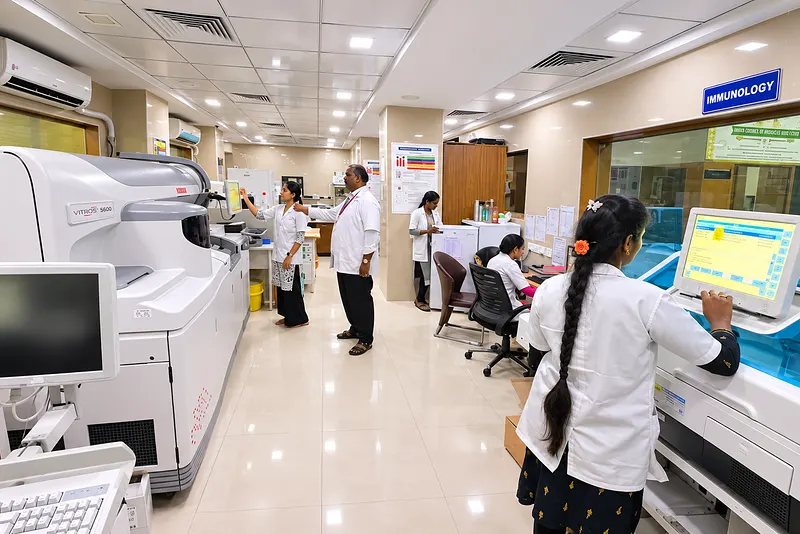
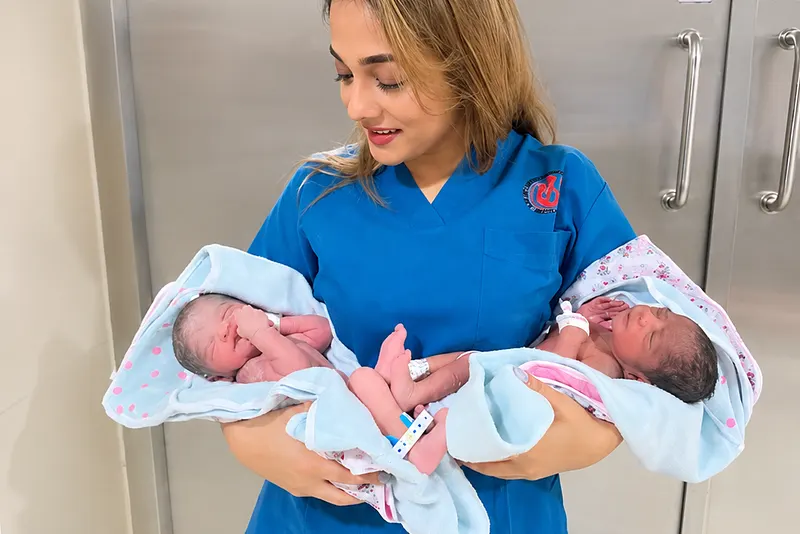
If you are looking for IVF treatment in Chennai, you are making one of the most important decisions of your life. At Aakash Fertility Centre — established in 1991 — we have helped over 60,000 couples become parents. This page explains the entire IVF journey: what the treatment involves, what affects your success, and what to expect at Aakash.
Last updated 12 May 2026 · Aakash Fertility Centre & Hospital, Chennai
IVF Treatment in Chennai
What Is IVF Treatment?
IVF — In Vitro Fertilisation — is a fertility treatment where eggs are collected from the ovaries, fertilised with sperm in an embryology laboratory, and the resulting embryo is transferred back into the uterus. IVF is the most effective fertility treatment available today.
The full IVF cycle — from the first injection to the pregnancy test — takes approximately 4 to 6 weeks. At Aakash, every step is supervised by a senior specialist and a dedicated embryologist.
Talk to a Specialist About Your Case →Call +91 72999 74701
Who Needs IVF Treatment in Chennai?
IVF is recommended when simpler treatments have not worked or when a diagnosis makes natural conception unlikely.
- Consultation & diagnosis on Day 1
- Ovarian stimulation 10–14 days
- Egg retrieval under sedation
- Embryo transfer Day 3 or Day 5
In short: IVF is considered when natural conception isn’t possible or other fertility treatments fail.
The IVF Treatment Journey — Step by Step
Step 1 — Consultation & Diagnosis
- ₹90,000+ Basic IVF (fresh cycle)
- ₹1,20,000+ IVF with ICSI
- ₹40,000+ Frozen embryo transfer
- First consultation
Step 2 — Ovarian Stimulation (10–14 Days)
- No stimulation drugs; uses the naturally selected egg.
Step 3 — Egg Retrieval (OPU)
- Uses lower doses of stimulation drugs to retrieve fewer eggs, aiming for safer, more cost-effective treatment.
Step 4 — Fertilisation & Embryo Culture
- Intracytoplasmic Sperm Injection (ICSI) : A single sperm is injected into the egg, especially useful in male-factor infertility.
- Intracytoplasmic Morphologically Selected Sperm Injection (IMSI) : High-magnification selection of optimal sperm for injection.
- Cryopreservation : Freezing embryos (or eggs/sperm) for later use.
- Pre-implantation Genetic Diagnosis (PGD)/Screening (PGS) : Screens embryos for genetic disorders before transfer.
IVF Success Rates at Aakash
Frequently Asked Questions — IVF Treatment in Chennai
Step 1 : Ovarian Stimulation
- Normally, a woman releases just one egg per month.
- In IVF, the goal is to have multiple eggs so there are more chances of success.
- The woman is given hormonal injections (FSH/LH-like medicines) for 8–14 days to help the ovaries grow several follicles (fluid-filled sacs containing eggs).
- Monitoring is done with ultrasounds and blood tests to check follicle growth.
Step 2 : Egg Retrieval (Ovum Pick-Up)
- When the follicles are mature (about 18–20 mm), an injection of hCG (trigger shot) is given to finalize egg development.
- 36 hours later, the eggs are collected.
- The doctor uses a thin needle under ultrasound guidance, inserted through the vagina into the ovary to gently suction out the eggs.
- This is done under light sedation or anesthesia — not painful, but some mild cramping may occur after.
Step 3 : Sperm Collection
- On the same day, a semen sample is collected from the male partner.
- If needed, sperm can be obtained through surgical techniques (TESA, PESA) or donor sperm can be used.
- The sperm is then washed and prepared in the lab so only the healthiest ones are selected.
Step 4 : Fertilization
What is the IVF success rate at Aakash?
- Conventional IVF – The eggs and sperm are placed together in a dish, and fertilization happens naturally.
- ICSI (Intracytoplasmic Sperm Injection) – A single, healthy sperm is directly injected into each egg (used in cases of male infertility or poor sperm quality).
Step 5 : Embryo Culture
- After fertilization, the eggs become embryos.
- The embryos are grown in the lab for 3–5 days.
- Embryologists monitor them daily to check their development.
- The best quality embryo(s) are chosen for transfer. Extra embryos can be frozen (cryopreserved) for future use.
Step 6 : Embryo Transfer
- A thin catheter (tube) is gently passed through the cervix into the uterus.
- One or two embryos are carefully placed inside the uterine cavity.
- This is a simple, painless procedure, similar to a Pap smear — no anesthesia needed.
Step 7 : Luteal Phase Support
- After transfer, the woman takes progesterone supplements (pills, injections, or vaginal gels) to help the uterine lining support implantation.
- This phase lasts about two weeks.
Step 8 : Pregnancy Test
- About 10–14 days after embryo transfer, a blood test (β-hCG) is done to check if pregnancy has occurred.
- If positive → an early ultrasound is scheduled.
- If negative → the couple may try again using frozen embryos or another stimulation cycle.
Book an IVF Consultation at Aakash
- Global Impact: By 2023, IVF and similar ART methods have resulted in over 12 million births worldwide.
- Success Factors: Success varies based on age, embryo quality, and treatment protocols.
- Add-on Treatments: Techniques like PGD, growth hormone, or supplements haven’t yet proven reliably effective and should be used cautiously.
Information on this page is general and not medical advice. Your doctor will recommend what is right for you after a consultation.