
Labor rarely begins the way movies portray it. It doesn’t always arrive with urgency or dramatic moments. For many women, it starts quietly—a subtle ache, a tightening that comes and goes, or simply a feeling that something has shifted.
In those early moments, uncertainty is common. You may question yourself or wonder if this is really labor. That’s normal. Your body is beginning a process it already understands, even if your mind is still catching up.
Labor is not only physical—it is deeply emotional. Thoughts may race. Fear and excitement often exist together. You may feel strong one moment and vulnerable the next. None of this means you are unprepared. It means you are human.
When Labor Slowly Finds Its Rhythm
Early labor can feel slow, unpredictable, and confusing. Contractions may start, stop, and return without a clear pattern. You might walk around, try to rest, or distract yourself with small tasks. Time often feels distorted during this phase.
This is your body gently preparing for what comes next. There is no need to rush. Every contraction, every pause, and every breath serves a purpose—even when it feels tiring or uncomfortable.
As labor progresses, intensity increases. Contractions demand more focus. Many women become quiet, close their eyes, and turn inward. Doubt may surface, and that’s common.
That moment of doubt doesn’t signal failure. Often, it means you are closer than you realize.
The Moment You Dig Deep
When pushing begins, your world narrows. Attention shifts fully to your body. You’re no longer thinking about time or stages—you are responding instinctively.
Pushing is physically demanding. It requires strength, patience, and trust. Yet it also awakens a powerful inner resilience. Many women describe this phase as discovering a strength they never knew they had.
Each push brings your baby closer. Each breath matters. Every effort leads toward something remarkable.
When You Finally Meet Your Baby
And then, everything changes.
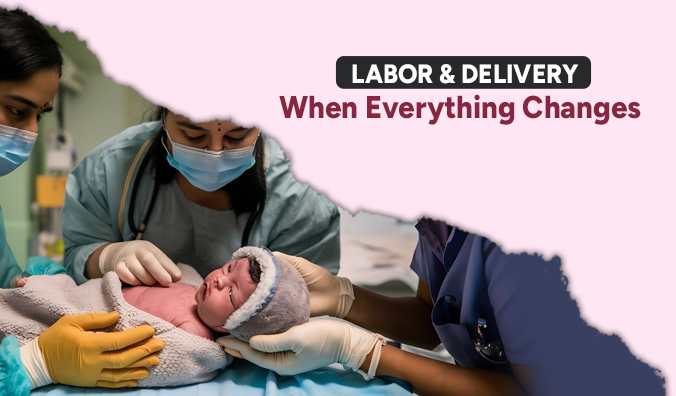
A cry. A movement. A tiny body placed on your chest.
At that moment, time seemed to pause. Pain fades into the background as emotions rise—suddenly and intensely. Some women cry. Some laugh. Some feel quiet, overwhelmed, or completely still. Others feel everything at once.
There is no right or wrong reaction. There is only the reality that your baby is finally here.
After Birth, Your Body Continues Its Work
Even after delivery, your body keeps working. The placenta is delivered gently. The uterus begins to contract. Healing begins quietly while your focus rests entirely on the new life in your arms.
This stage is softer and calmer. It’s your body slowly signaling that its work is complete—and that rest can begin.
There Is No “Right” Way to Labor
Every labor is different. Some are long, others short. Some progress smoothly, while others take unexpected turns. None of these experiences define your strength or success.
Your labor unfolds in the way it needs to—for you and your baby.
Why Understanding Labor Helps Emotionally
Learning about labor doesn’t remove discomfort, but it reduces fear. When you understand what your body is doing, you stop resisting the process and begin to trust it.
You recognize that discomfort has purpose. That fear doesn’t always mean danger. That you are not losing control—you are moving forward.
A Final, Honest Thought
Labor and delivery change you—not just physically, but deeply and forever.
It’s okay to feel afraid. It’s okay to feel unsure. It’s okay to need support. None of these emotions take away from your strength.
Birth is not about perfection.
It is about endurance.
It is about surrender.
It is about love beginning in the most human way possible.
And when it’s over—even if you don’t realize it right away—you will have done something truly extraordinary.
No comment yet, add your voice below!